
The Trump administration will deliver a national artificial intelligence (AI) legislative framework to Congress this year to protect innovation and maintain children’s safety, the White House science and technology director said Wednesday.
Office of Science and Technology Policy (OSTP) Director Michael Kratsios said he is working closely with White House AI Czar David Sacks to create a national legislative proposal, after a December executive order by President Donald Trump blocked state AI legislation.
Trump’s order came after Congress ultimately decided not to include language in major legislative packages that would preempt state AI laws. The president called state-level regulations, more than 100 of which were passed last year across 38 states, anti-innovation.
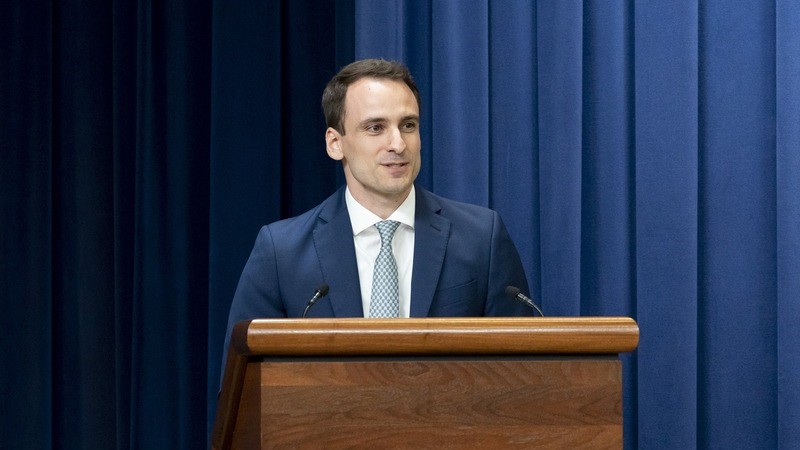
“Our hope is that we can create a framework that is pro-innovation, but is also one that looks out for America’s youth and children and understands how we have to be responsible in the way that we deploy this technology around the country,” Kratsios said while speaking at the CES trade show in Las Vegas.
That framework will support priorities outlined in the Trump administration’s AI Action Plan, which the administration released last summer to increase AI innovation, infrastructure, and commercialization, Kratsios said.
The OSTP director said that in order to boost AI innovation, the United States needs “a regulatory environment where we can allow all of our great AI technologies to actually thrive and commercialize the United States.”
“Sometimes you have to take rules down; other times you have to write new rules that can allow new technologies to thrive,” he added.
The administration is also looking at new policies and initiatives related to transportation. In the next two years, Kratsios said the administration wants to create rules that enable more self-driving cars, saying that until the government moves to support innovative transportation technologies, the sector’s progress will be limited.
“You and I could create an amazing self-driving vehicle in our garage, but unless the government says it’s okay, we can’t actually sell it to anyone,” Kratsios explained, adding that “we have to do a much better job of accelerating the pace at which we put out the rulemaking which will allow this self-driving future to happen.”
To power the administration’s AI initiatives, Kratsios said that the Trump administration is prioritizing the development of nuclear energy as one of its three tech priorities – the others include AI and quantum technologies – as AI data centers put strain on existing power supplies.
While the administration has eliminated what it called regulatory roadblocks to expedite energy infrastructure development, Kratsios said the biggest challenge is “at the local level,” and the need to create opportunities for local communities to benefit from having data centers nearby.
“From an energy standpoint, the press has been very clear: if you want to build a data center, you should … be building your own power to support that. You shouldn’t be drawing from the larger grid and ultimately raising prices for Americans,” Kratsios said.
“That’s something that we’re pushing a lot of the folks in the big data center companies to work on, and something we’re gonna be doing for a very long time ahead,” he added.
OpenAI and Oracle, have begun constructing a natural –gas, off-grid plant in Texas, while xAI has used gas turbines in Tennessee to power its data centers. While the administration has not issued any public policies or statements requiring companies to supply their own power, Trump has suggested fast-tracking approvals for AI companies seeking to build power plants attached to data centers.