
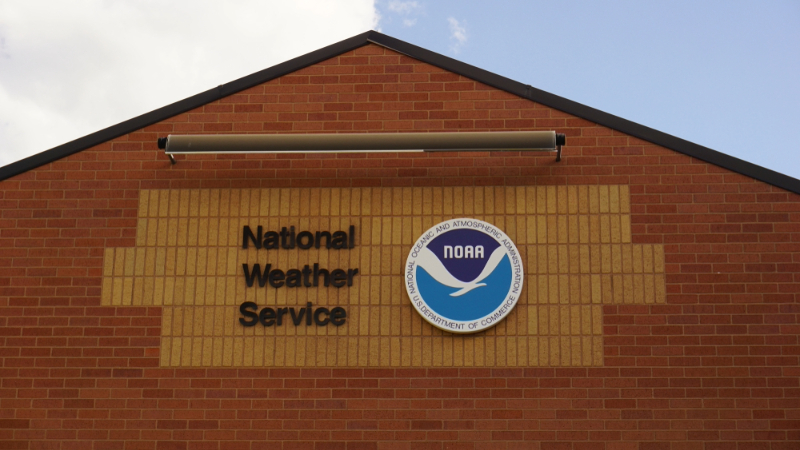
The National Weather Service (NWS) has awarded two contracts for its new cloud-based data and applications services, ushering in what the government calls “a new era of modernization for the nation’s weather agency.”
The changes will effectively transfer the Advanced Weather Interactive Processing System (AWIPS) – an interactive computer system that integrates meteorological and hydrological data with satellite and radar imagery, helping forecasters issue more accurate forecasts – to the cloud.
That will allow forecasters to create and distribute weather forecasts and advisories without being tied to a specific location, the National Oceanic and Atmospheric Administration (NOAA) said. The weather service is part of NOAA.
The new technology will also give NWS forecasters more flexibility to accelerate the application of artificial intelligence and machine learning techniques to future forecast processes, NOAA said.
NOAA did not disclose the companies awarded the two contracts, but a federal database search revealed that they are Booz Allen Hamilton and Accenture Federal Services. Both five-year contracts began Feb. 15. The amounts are unclear.
“This transition to cloud-based technology is a monumental improvement from the current structure, which was first implemented in the 1990s,” said NOAA Administrator Neil Jacobs. “This upgrade will greatly improve the NWS mission by eliminating time spent downloading data to desktop workstations, while increasing flexibility through remote laptop accessibility.”
The cloud transition continues a focus on technology that has been building since NOAA in 2020 released a strategy to coordinate efforts to use AI across the agency.
AI use cases at NOAA, officials have said, include using the technology to identify fish species from satellite imagery and predicting precipitation sizes, such as hail size.
Growing concerns about severe weather make the use of AI and the transition to cloud technologies even more important to the effort to better forecast and disseminate weather and climate information, according to NOAA officials.
In December, NOAA launched what it called the first-ever AI-powered ‘ensemble’ forecast system, which the agency said marked a significant advancement in forecast speed, efficiency, and accuracy.
The two new cloud contracts are expected to advance the development of two proprietary new tools exclusive to NWS. One is NWS HIVE (Hydrometeorological Interactive Virtual Environment), which will serve as the central application environment for NWS forecasters to analyze data, create weather forecasts, and issue warnings, replacing AWIPS.
The second is NWS CIRRUS (Centralized Integrated Real-Time Repository for Unified Services), which will serve as a centralized, cloud-based repository for both NWS-owned and partner data. NOAA said it will move away from the current fragmented storage and distribution process across legacy systems, providing the high-quality foundation necessary to power future capabilities across NWS and transforming its data management infrastructure.
NWS HIVE and NWS CIRRUS will develop in two phases, NOAA said. Phase 1, targeted for completion by early 2027, will establish the capability for storage and viewing of weather and water data, as well as the creation and issuance of key public-facing products.
Phase 2, scheduled for completion by early 2028, is slated to deliver the comprehensive capabilities required to decommission the legacy AWIPS system fully.